Short answer
No. A property may have groundwater beneath it, but drilling a well involves geology, state requirements, groundwater conservation district rules, construction standards, location constraints, and practical access. The answer depends on the parcel and intended use.
Start with the correct jurisdiction
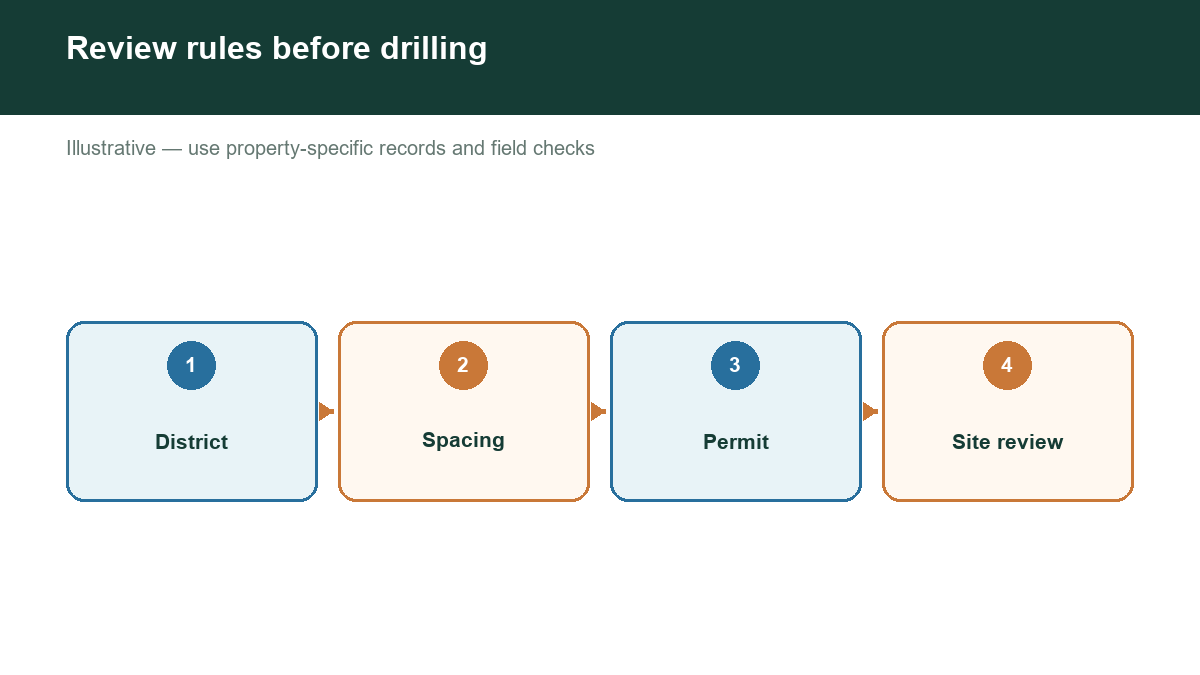
Texas water-well regulation involves state agencies and, in many areas, groundwater conservation districts. District boundaries and rules vary. A district may require registration, a permit, spacing from property lines or other wells, production limits, metering, reporting, or specific construction practices.
Before drilling, identify whether the property lies within a groundwater conservation district and contact that district directly for current requirements. Also confirm the applicable state licensing and well-construction information through the responsible Texas agencies and a licensed driller.
Geology is the practical constraint
Groundwater availability is not the same as a guaranteed productive well. Nearby records can show typical depths, formations, reported water levels, and uses, but the result on a new parcel can differ. Fractured rock, clay layers, sand lenses, faults, elevation, and water quality can change over short distances.
Look for several comparable nearby wells. Separate domestic, livestock, irrigation, public-supply, and monitoring wells. Compare aquifer, depth, completion interval, elevation, age, and reported performance. Treat the result as evidence, not a promise.
Location and construction matter
The well must be placed to protect it from contamination and flooding and to meet applicable setbacks. Septic systems, animal areas, chemical storage, drainage paths, roads, easements, utilities, and property lines may affect the site. A driller should evaluate access for equipment and the design needed for the formation.
What about water rights?
Texas groundwater law and local district rules can be complicated. Ownership, regulation, exemptions, permits, and production rights may depend on the location and use. Do not assume that owning the surface estate answers every groundwater question. For a high-value purchase or commercial project, obtain advice from the relevant district and a qualified Texas attorney or water professional.
If a well is not feasible
Alternatives may include a public water connection, shared system, rainwater collection for nonpotable uses, storage, or a different site plan. Each alternative has its own engineering, health, legal, and maintenance considerations.
Check groundwater evidence near your Texas property
Use our assessment tool to review nearby well evidence and identify the questions to ask before hiring a driller or closing on land. The assessment is a research aid, not a permit, legal opinion, or guarantee of production.