Short answer
After flooding, do not assume a private well is safe because the pump still runs or the water looks clear. Floodwater can carry sewage, chemicals, sediment, and other contaminants, and it can damage electrical equipment and the well's protective components.
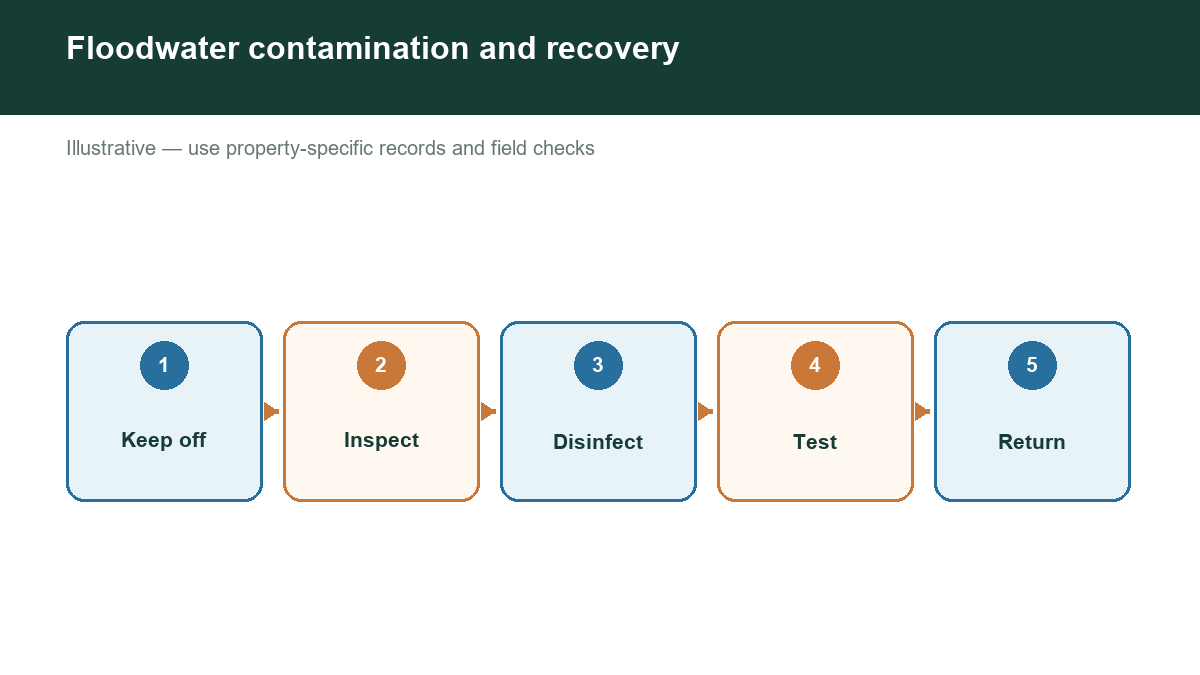
If your well was flooded or you suspect contamination, use a known safe water source and contact your local health authority and a qualified well professional. Public groundwater maps cannot establish whether your household water is safe after a flood.
FIRST: PROTECT PEOPLE BEFORE INSPECTING EQUIPMENT
CDC warns against drinking water from a well that may be contaminated after flooding. It also identifies electrical hazards around wells and advises that a qualified electrician or well professional check affected equipment before power is restored. Do not enter a well pit; hazardous gases can accumulate there. [1]
Stay away from standing water around energized equipment. Do not approach switches or disconnects if reaching them is unsafe. Keep children and animals away from damaged electrical systems and open or damaged well structures.
Use bottled water or another verified safe supply for drinking and food preparation while obtaining specific guidance. Ask the local health authority about bathing and other household uses when contamination is suspected.
BOILING DOES NOT SOLVE EVERY CONTAMINATION PROBLEM
Boiling or disinfection does not make water contaminated with fuel or toxic chemicals safe to drink, according to CDC. [1] After a flood, do not assume the only concern is bacteria.
Floodwater can contain sewage, agricultural materials, and household or industrial hazardous waste. [2] Share information about nearby spills, fuel storage, septic damage, and other possible exposures with the health authority and laboratory.
Choosing a safe alternate supply is different from attempting to repair or treat an unknown contamination problem.
GET THE WELL AND SYSTEM INSPECTED
Once the site can be approached safely, have a qualified professional evaluate the cap, casing, seals, wiring, pump, controls, and connected equipment. Ask whether floodwater entered directly through the wellhead or damaged parts of the system.
Take photographs from a safe location and record when flooding occurred, whether the wellhead was submerged, when pressure was lost, and any unusual water appearance or odor. This record supports the evaluation without requiring you to open the well.
TDLR's water-well program provides Texas licensing and technical resources for drillers and pump installers. [3] Use an appropriately qualified service provider, and involve an electrician where electrical damage is possible.
DISINFECTION SHOULD FOLLOW A VERIFIED PROCEDURE
TCEQ publishes emergency resources for disinfecting private wells and household plumbing and for collecting laboratory samples. [4] Those procedures should be applied to the actual system with appropriate professional or health-authority guidance.
Do not guess a chlorine dose or assume that a one-time treatment proves the system is safe. Disinfection may need to be preceded by repairs, and it does not remove every chemical contaminant.
Keep treatment devices, storage tanks, and indoor plumbing in the recovery plan. The well is only one component of the household water system.
CONFIRM SAFETY WITH APPROPRIATE TESTING
Ask the laboratory what samples, containers, collection points, and timing are needed after repair or disinfection. TCEQ's microbial-sampling guide addresses testing when flooding or pressure loss raises contamination concerns. [5]
A passing bacterial result addresses the tested microbial indicators under the sampling conditions; it does not exclude chemicals that were not tested. Discuss additional analysis when the incident suggests other exposures.
Follow the laboratory and health authority's instructions on when the water may be used again and whether repeat testing is needed. Avoid using a generic online waiting period as a substitute for system-specific guidance.
REVIEW FUTURE FLOOD EXPOSURE
After the immediate issue is resolved, discuss drainage, wellhead protection, and equipment location with a qualified professional. Review applicable requirements before altering the well or surrounding improvements.
For a property purchase, ask about flood history and obtain current inspection and laboratory results rather than relying on a seller's memory of recovery.
KEEP RESEARCH AND WATER-SAFETY CONFIRMATION SEPARATE
Visit https://www.groundwaterassessment.com/ for groundwater research related to a Texas property. After a flood, safety must be confirmed through onsite evaluation and appropriate laboratory testing, not inferred from nearby well records.
Sources
- [1] CDC: How to Disinfect Wells After an Emergency. Immediate water and electrical safety; limitations of disinfection.
- [2] CDC: Safety Guidelines - Floodwater.
- [3] TDLR: Water Well Drillers and Pump Installers.
- [4] TCEQ: Emergency Preparedness Resources. Private-well disinfection guidance.
- [5] TCEQ: GI-433, How to Sample Your Private Well Water for Microbial Contaminants.