Short answer
A Texas well can stop producing because the groundwater level has fallen below the pump intake, the well is being pumped faster than it can recover, the pump or electrical system has failed, the well has filled with sediment, or the water-bearing formation has changed. “Dry well” is a useful description of the symptom, but it is not a diagnosis.
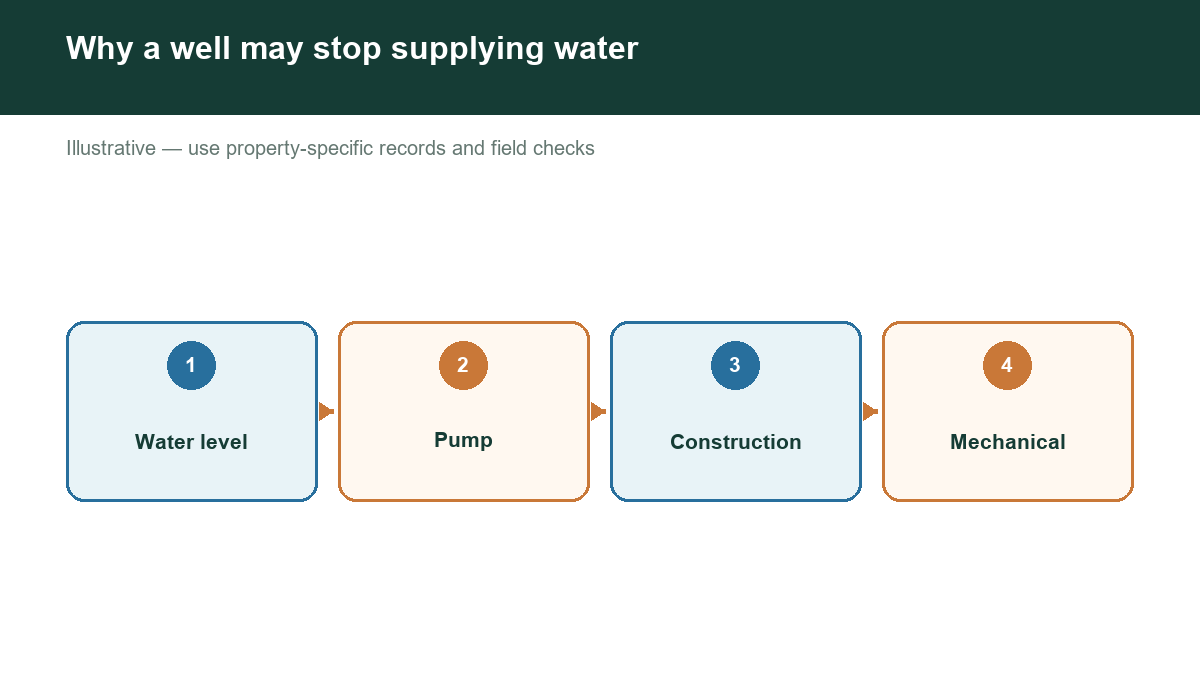
Common causes
Drought reduces recharge and often increases demand. Irrigation, municipal pumping, industrial use, and concentrated domestic use can lower water levels in some areas. A shallow well may be affected sooner than a deeper well, but deeper does not automatically mean secure.
Some wells have low storage or low transmissivity. They may provide enough water for a home when used intermittently but struggle with continuous pumping, outdoor irrigation, or livestock demand. A pump that runs too long can draw the water level below the intake even when water remains in the formation.
Mechanical failures are also common. A failed pump, pressure switch, control box, wiring problem, blocked screen, damaged casing, or leaking plumbing can look like a groundwater shortage.
How to troubleshoot safely
Start with simple observations: Is the pump receiving power? Is the pressure tank working? Are breakers, controls, and treatment equipment operating? Has the water become cloudy, sandy, or discolored? Is the issue limited to one fixture or the entire property?
Do not open electrical equipment or pull a submersible pump unless qualified. A licensed well or pump professional can measure static and pumping water levels, inspect equipment, check flow, and determine whether the problem is hydraulic, mechanical, or electrical.
Review history
Compare the current symptoms with past water levels, pump settings, maintenance records, and nearby well activity. TWDB records can provide regional context, but public observations are not a real-time diagnosis for a private well. Nearby wells may be completed in different formations or may be affected by different pumping schedules.
What can help prevent a recurrence?
Match water use to well capacity. Repair leaks. Use storage where appropriate. Avoid unnecessary irrigation during drought. Protect the wellhead from flooding, chemicals, livestock, and surface drainage. Keep records of service calls, water levels, flow tests, and laboratory results.
If a well is permanently abandoned, follow applicable Texas requirements for plugging. An abandoned or improperly sealed well can provide a pathway for contamination and create a safety hazard.
When replacement or deepening is considered, obtain a site-specific evaluation. Deepening a well may not be feasible or may reach water of unacceptable quality. A larger pump can increase stress on a low-yield well rather than solve the underlying problem.
Check groundwater evidence near your Texas property
Our assessment tool helps you review nearby well history and regional groundwater evidence. Use the results to frame questions for a licensed professional, not as a substitute for a current field diagnosis.